Creative Sunday Practice #19
This week’s Creative Sunday Practice is built around something most of us wear, misplace, clean, or push up our nose several times a day: glasses.
Ordinary. Functional. Almost invisible in daily life. But visually? They are full of possibilities.
Glasses are not just objects. They are frames, filters, mirrors, and lenses all at once. They bend light. They reflect space. They distort reality. And that makes them a powerful training tool for your creative eye.
Instead of photographing the glasses, try photographing through them, into them, and around them.
Here are a few ways to begin.
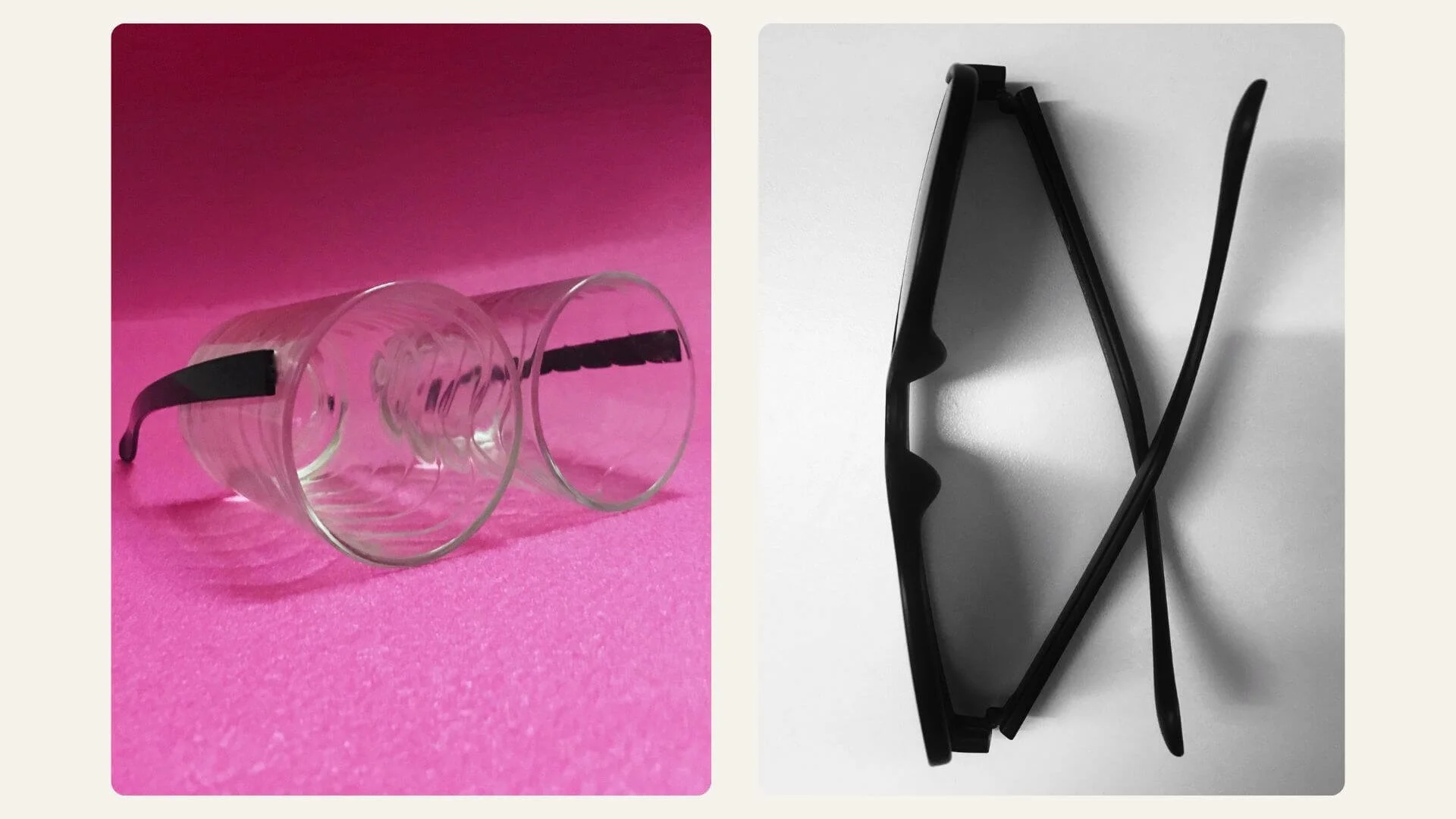
1. Photograph the Reflection
Place the glasses on a table near a window. Look closely at the lenses.
What do they reflect?
A window frame?
Your ceiling?
Your own silhouette holding the phone?
Move slightly left and right. You’ll notice how quickly the reflection changes. Small shifts in angle create completely different compositions.
Reflections are one of the most underused tools in smartphone photography. Glasses give you two controlled mirrors to experiment with.
2. Play With Distortion
Hold your phone close to one lens and focus on something behind it.
The lens will slightly distort or magnify what’s in the background. You might notice subtle bending of lines or changes in scale.
Try this:
👓 focus on the lens itself
👓 then tap to focus on the object behind it
👓 compare the difference
You’re training yourself to see how perspective shifts affect storytelling.
3. Use the Frame as a Frame
The shape of glasses is already a composition tool.
Place something interesting behind one lens and let the rim become a natural border. You’re essentially building a frame within your frame.
This is a powerful technique in visual storytelling — guiding the viewer’s attention without them even noticing.
4. Explore Symmetry (and Break It)
Lay the glasses flat and shoot directly from above.
You’ll likely get a clean, symmetrical image. Now move one side slightly. Twist one arm. Open one side more than the other.
Watch how the mood changes when symmetry breaks.
Symmetry feels stable. Asymmetry creates tension.
Both are useful. The difference is intentionality.
5. Put Them On (or Don’t)
If you’re comfortable, experiment with self-portraits. Glasses can:
🕶️ hide part of the face
🕶️ create mystery through reflection
🕶️ add character
Or photograph someone else wearing them. Focus on what the lenses reflect rather than on the person.
Sometimes what’s in the glasses tells a stronger story than the face behind them.
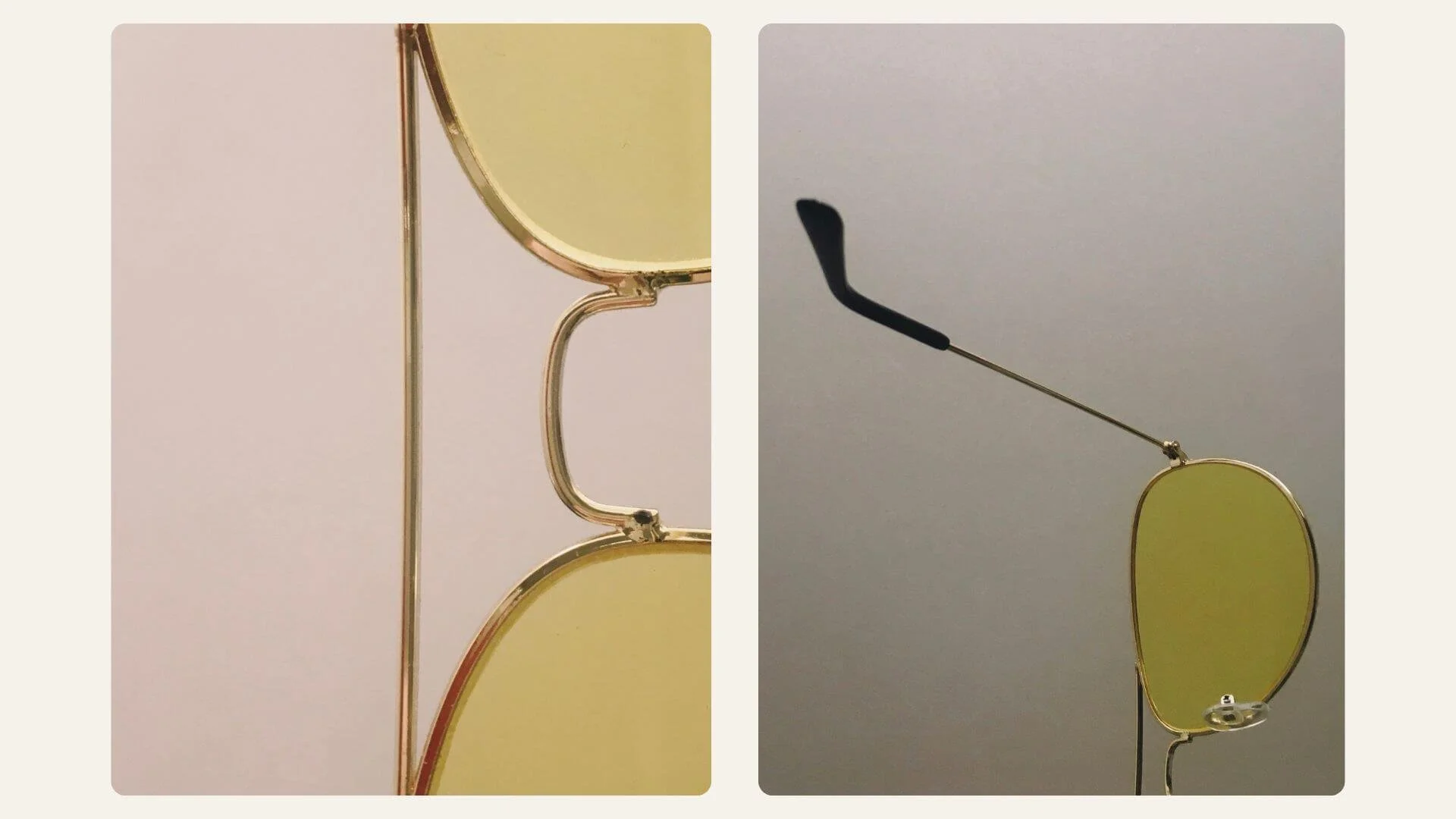
My Own Experiment
When I tried this exercise, I noticed something interesting.
I stopped thinking about “taking a good photo” and started thinking about light behavior instead. I paid attention to tiny highlights, micro reflections, and how moving the glasses just a few centimeters completely changed the image.
That shift — from chasing a result to observing light — is the real practice.
And that’s what these weekly exercises are about.
Give Yourself 10 Minutes
No big concept.
No mood board.
No final image in mind.
Just move, observe, adjust, respond.
You’ll start seeing reflections in shop windows differently. You’ll notice frames inside architecture. You’ll recognize how glass changes a scene.
And that awareness carries into every other photo you take — whether for yourself, your brand, or your team.
I’ll be back next Sunday with another simple object to keep the creative muscle active.