Why You Don't Need AI to Take Better Photos
As someone who spends my days teaching professionals and teams creative smartphone photography, I’ve realized I am no longer competing with bad lighting, poor angles, or lack of inspiration.
I’m competing with something much more subtle: convenience.
We are entering a new era of mobile tech where camera development is no longer about helping you shoot better; it’s about making sure you don't have to try at all.
The Push Toward "Effortless" Media
Look at the recent innovations coming out of major tech launches.
Automated Capture:
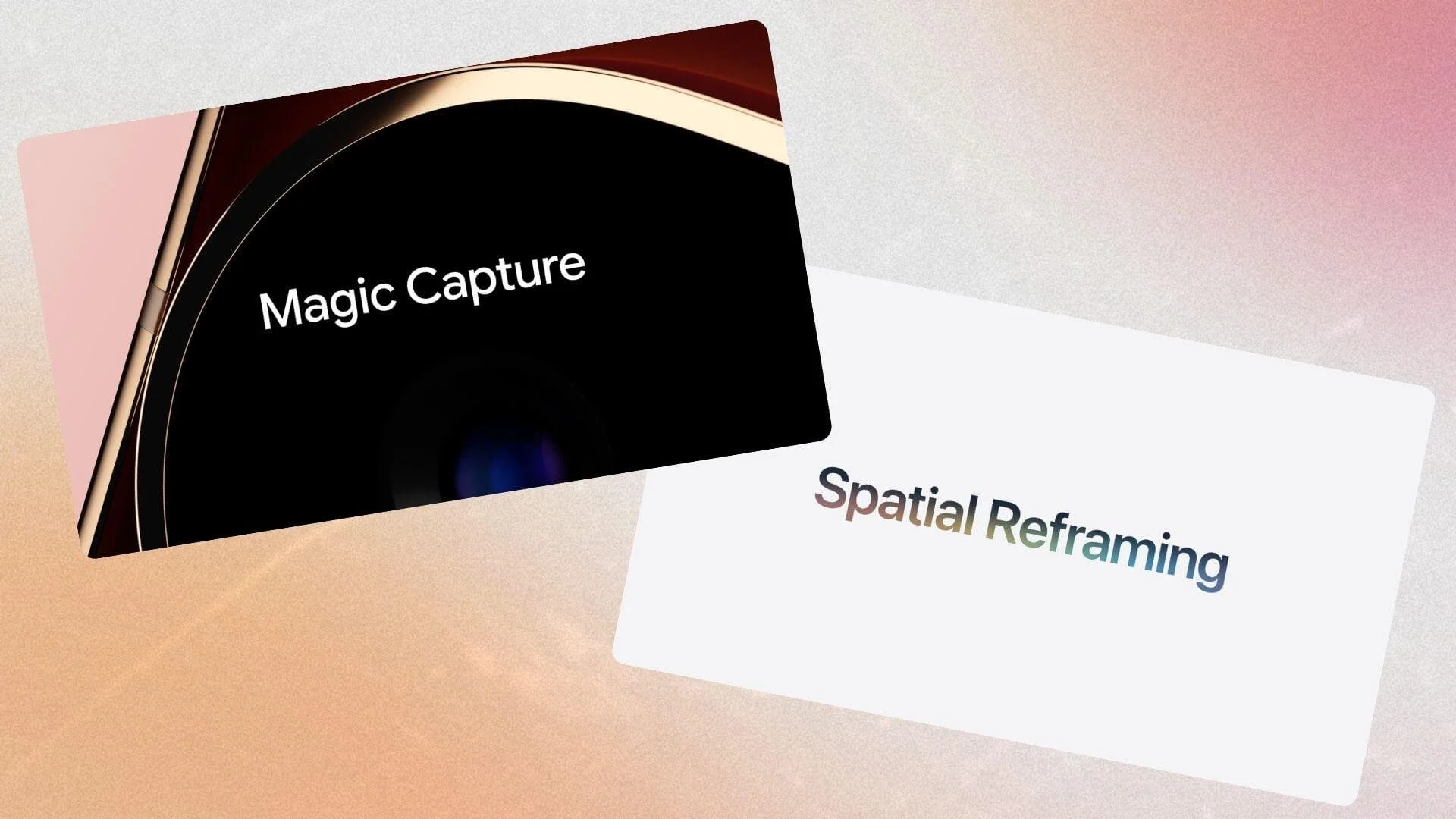
Features like Google’s Magic Capture allow users to simply point their phone in a general direction while the device records hundreds of frames and algorithms pick, unblur, and crop the "best" still photo automatically.
Post-Shot Generative Editing:
Features teased by Apple allow users to change the physical camera angle after the photo has already been taken, using generative AI to fill in parts of the background or scene that were never actually captured in real life.
Both are genuinely impressive feats of modern engineering. But both remove the single most important element photography has ever asked of us: our active presence.
They trade the rich experience of making a photo for the passive convenience of receiving one.
Why the Magic Lives in the Reps, Not the File
In my smartphone photography workshops, I see a common pattern among people learning to see visually for the first time: the magic was never actually in the final image file.
The magic is in the process:
Noticing how light shifts across a room at 3:00 PM.
Anticipating the exact half-second before a colleague or loved one laughs.
Deciding (intentionally) where your visual story begins and where the frame ends.
That intentionality is a muscle. And like any muscle, it only builds through repetition.
If your smartphone frames the shot, times the shutter, and selects the final image for you, you never take the rep. You might end up with a technically sharp picture, but you don't get any better at photography.
More importantly, you miss out on the very state that made so many of us fall in love with cameras in the first place: that quiet, immersive flow state where you’re no longer thinking about tech, but simply watching, waiting, and creating.
AI as an Assistant vs. AI as a Replacement
To be clear: I am not anti-AI.
The rapid evolution of computational photography is fascinating, and we were actually debating these exact feature launches during the opening minutes of a recent corporate workshop while waiting for everyone to join the Zoom room.
There is, however, a critical distinction we need to make.
AI Assisting Your Eye:
Exposure balancing, natural color rendition, and low-light enhancement that help render what your eye actually saw.
AI Replacing Your Eye:
Software that removes the need for composition, timing, physical movement, and human decision-making.
I am all for the first. The second is what I actively coach against.
Reclaiming Your Visual Eye (A 10-Minute Challenge)
If we want to maintain our creative agency, the conscious shift has to start with us. You just need to turn off the safety nets for a moment.
Here is a quick exercise to try today:
Pick up your phone right now.
Turn off the fully automated "smart" features for just 10 minutes.
Walk around your current space. Look for shadows, reflections, or harsh light.
Take the shots manually. Move your body high, low, left, and right.
Miss a few shots, learn from them, and repeat.
That is the entire game. That micro-habit is the fastest path to unlocking the visual flow state right from your desk, home, or office.
Ready to Train Your Creative Eye?
Technology will keep getting faster and more convenient, but the ability to see stories where others see clutter remains a uniquely human skill.
If you or your team want a shortcut to building that creative habit — learning how to capture striking, authentic imagery using the phone already in your pocket — explore my Online Smartphone Photography Workshops or get in touch directly to bring an interactive session to your organization.